June 2026
Star Wars: The Mandalorian and Grogu (PG-13)
20/06/26 20:47 Filed in: 2026
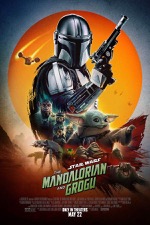
Starring: Pedro Pascal
May 2026
Warning! This is NOT a movie review. This is a critique of the film. Intended to initiate a dialogue, the following analysis explores various aspects of the film and may contain spoilers. For concerns over objectionable content, please first refer to one of the many parental movie guide websites. Ratings are based on a four star system. Happy reading!
For several months before the release of Star Wars: The Mandalorian and Grogu, all I heard was how terrible it is. This prompts several questions about the film (aside from how so many people saw the movie before its premier). Is M&G amazing? Certainly not! Is it silly at times? Undoubtedly, especially the laughably unbelievable scene where an AT-ST walker sprints down the side of a snowy mountain. Is the movie heavy on action and thin on plot? Yep. But is it awful? No.
At 2 hours and 12 minutes, M&G plays like a glorified version of The Mandalorian TV series (2019-2023)—the uneven, episodic storytelling bolsters this notion. The action-packed opener on the Hoth-esque snow planet, the arena fight sequence, the jungle shootout and Dr. Grogu scenes and the climatic destruction of the Hutt fortress on Nal Hutta could easily be edited into 30-40-minute segments.
So, will M&G be chopped up into episodes for a possible Season 4 of the TV show? Would you put it past Disney+?
M&G is the first Star Wars movie since the final Skywalker Saga film in 2019, Star Wars: Episode IX – The Rise of Skywalker. That film had mixed reviews and fan reaction, but still made enough money to make Greedo green with envy. Will M&G be a hit, or will it continue the franchise’s trend of diminishing box office returns? TBD, but it is telling that Disney has no new Star Wars projects in production (other than Starfighter). Despite some hits, like Andor and Star Wars: Maul – Shadow Lord, most of the Star Wars TV offerings have been poor to middling, begging the question—is the franchise in decline?
Though more pedestrian than previous Star Wars movies, some of M&G’s jungle scenes are reminiscent of the slimy and grimy giant bug attack sequence in Peter Jackson’s King Kong (2005). To counterbalance the cute cuddliness of “Baby Yoda,” did writers Jon Favreau, Dave Filoni (who reprises his role as an X-wing pilot from the TV series) and Noah Kloor decide to dredge up every disgusting and vile creature they could find in the darkest corners of the “galaxy far, far away” to cater to the teenage boys in the audience? Regardless, many of these creepy scenes may be too intense for younger viewers.
A large swath of the Star Wars bestiary appears in this movie. In addition to three Hutts (Jabba’s rotund relatives), a bounty hunter (Embo) and his ravenous pet wolf, and a slew of other alien species from the earlier films and TV series, M&G features all manner of bugs, a scorpion and a giant alabaster dragon snake. Then there’s the arena on Shakari (the neon-tinged city has a decided Blade Runner vibe), where Mando (Pedro Pascal) and Rotta the Hutt (Jeremy Allen White) must fight the Dejarik (remember those holographic chess creatures in the first Star Wars movie?) menagerie in order to earn their freedom. The massive melee is another of the movie’s overlong, overblown action sequences aimed at the teen boy demo and fans of WWE or MMA matches. While I applaud the nod to the OG film, the sequence quickly becomes tedious, much like the creature clash in the arena on Geonosis in Star Wars: Episode II - Attack of the Clones (2002).
M&G’s cast is scant and, other than Mando, the most prominent characters in the movie are Grogu and Rotta—two CG characters. In fact, for a live-action movie, M&G has far more CG characters than flesh and blood ones. While the four Anzellan mechanics (remember Babu Frik from Episode IX?) will get lots of laughs, simian store owner Hugo Durant (voiced by famed film director, Martin Scorsese) steals the show.
So, what’s missing here that was in the TV series? For one thing, many of the characters we’ve grown to love are MIA: no Greef Karga because Carl Weathers has sadly passed away, no Cara Dune because Gina Carano was fired by Disney for her comments on Twitter during COVID. But where’s fellow Mandalorian, Bo-Katan Kryze (Katee Sackhoff)? And what about super villain, Moff Gideon (Giancarlo Esposito)? Or uproariously funny mechanic Peli Motto (Amy Sedaris)?
The new faces in M&G are the epitome of bit players. Garazeb “Zeb” Orrelios (Steve Blum) is on loan from the superlative animated series, Star Wars: Rebels. He’s in a few scenes, has a few lines, but has no volition or motivation apart from aiding Mando on his quest. Mando and Zeb are both pilots, so the latter’s inclusion on the mission is redundant. But I suppose Burger King needed another toy to give away with its BBQ Bounty Whopper meal (excellent, by the way), so sidekick Zeb was included in the cast.
Similarly, Colonel Ward (Sigourney Weaver) is in a handful of scenes where she critiques Mando’s “messy” missions or debriefs him on a new assignment—talky scenes that most lesser actors could’ve pulled off just fine. Ward is finally given something to do when she leads the attack against the Hutt hives on Nal Hutta during the climactic battle, but all she does is bark orders from her cockpit; an egregious underutilization of Weaver’s acting prowess.
As if the remedial dialog written for Weaver and the other performers isn’t bad enough, the cartoony plot is aimless and simplistic. The story focuses on a pair of random assignments for Mando that really don’t amount to anything. The contrived plot involving villain, Lord Janu (Jonny Coyne), is utterly daft. This supposedly devious, heartless criminal divulges key intel to the New Republic, presumably without even the threat of torture. No lies? No hedges? No erroneous information that sends the good guys on a wild goose chase? Upon further reflection, I must apologize to cartoons…many are written better than this film.
The major problem with the story is that there’s no significant character growth for Mando. He endures minor obstacles and hardships and gets by with a little help from his green friend. Grogu’s only character change is that he’s more adept at using the Force and can lift heavier objects than in the TV series. Tip for Favreau and Filoni: movies require more character growth than what Mando and company undergo here.
Still, all in not lost. The movie has a good mix of humor and action, and is well produced. Since the story is so simple, no familiarization is required to understand and enjoy the movie. Plus, M&G hits the bull’s-eye with its target demo. For better or worse, M&G has successfully introduced a new generation of fans to the franchise.
So, what does the future have in store for Mando? More TV seasons and movies? Some rumors before the movie’s release suggested that M&G would wrap up Mando’s story. It’s hard to see that being true since the movie’s resolution is so open-ended, and since die-hard fans would clamor for a better resolution.
In the end, what’s the point of the movie? There isn’t one. The sole purpose of the movie was to capitalize on the success of the TV series. But Disney’s timing is off. It’s been three years since the last episode of The Mandalorian aired. Interest in the property has waned in the intervening years to the point where this movie feels like an afterthought (or a desperate attempt at reinvigorating the TV series). Mando had his moment of glory during Seasons 1 & 2 of the TV series, but with the show in limbo and the release of this mediocre movie, it’s obvious the Force is no longer strong with Mando.
Or to put it a different way, the shine is off the beskar.
Rating: 2½ out of 4
A Great Awakening (PG-13)
19/06/26 14:52 Filed in: 2026
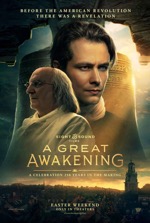
Starring: John Paul Sneed
April 2026
Warning! This is NOT a movie review. This is a critique of the film. Intended to initiate a dialogue, the following analysis explores various aspects of the film and may contain spoilers. For concerns over objectionable content, please first refer to one of the many parental movie guide websites. Ratings are based on a four star system. Happy reading!
A Great Awakening spotlights two famous men from America’s colonial period: George Whitefield (Jonathan Blair) and Benjamin Franklin (John Paul Sneed). The fiery evangelist and inventor/newspaper editor/statesman, respectively, struck up an unlikely friendship. It was a symbiotic relationship—Franklin used his printing press to help spread awareness of Whitefield and his message, and Whitefield provided sensational headlines for Franklin’s newspaper every time he traveled to Philadelphia.
Though their beliefs were completely different, both men were motivated by the pursuit of truth: Whitefield promulgated the Gospel of Truth; Franklin pursued journalistic truth. Whereas Whitefield used the spoken word to communicate with his audience, Franklin used the printed word to reach his. Both men were orators: Whitefield’s rousing words helped unify scores of Pre-Revolutionary War colonists; Franklin’s wise words helped unify quarreling delegates at the Continental Congress, the seething cauldron of viewpoints that eventually produced the Declaration of Independence.
The two men had opposite career paths—Whitefield trained to be an actor but ended up a preacher, while Franklin’s father wanted him to be a pastor, but he ended up a businessman. Also ironic is that Franklin, a deist, recommended congress should begin each day with a prayer…a practice that continues to this day.
One of the most memorable scenes in the movie is Whitefield’s first visit to the City of Brotherly Love, when he spoke to a large crowd from the courthouse balcony. Whitefield’s homily is electric and Franklin’s attempt at determining the size of the crowd (an estimated 30,000 people) is highly entertaining.
From candles to lightning rods, the movie is packed with symbols and metaphors. The film also offers some keen observations of human nature, like the brutal conditions of British coal mines of the period, and the indignance of staunch religious leaders who rejected Whitefield’s spirited, and often abrasive brand of preaching. Other insightful commentary comes from Franklin, who quips that whether soothing or stoking fears, both types of headlines sell papers.
As is often the case in life, a person’s greatest asset also can be their greatest liability. Whitefield’s ability to project his voice over large crowds eventually lead to respiratory issues—he died of asthma at age 55.
Another example of the greatest strength/greatest weakness paradox is the movie’s historical content. While it’s admirable that writers Jeff Bender, Jonathan Blair and Joshua Enck (who also directed the movie) have foregrounded the spiritual aspects of colonial America, the film’s accuracy is occasionally dubious. For instance, Whitefield’s relationship with John Wesley was far more contentious than what’s portrayed in the movie; the thorny doctrine of “predestination” significantly contributed to this rift.
Another drawback is that the accounts of Whitefield and Franklin are highly sanitized—Whitefield owned slaves and Franklin was a womanizer. Of course, this is a conservative flick, so we’re only allowed to see highly-idealized versions of these men, which diminishes the movie’s veracity and potential dramatic impact.
In the end, A Great Awakening is a well-made biopic that captures the flavor of the colonial period without fully immersing us in it. Still, it’s important for us (especially young people) to be reminded of the some of the leading figures and events of this pivotal period in our nation’s history.
The movie effectively raises awareness of how two prominent men of the past, despite different backgrounds and beliefs, forged a deep, enduring friendship. If only people of different backgrounds/beliefs/political parties could achieve the same today.
With the upcoming 250th Anniversary of our country on July 4th, the movie’s greatest success is its timing.
Rating: 2½ out of 4